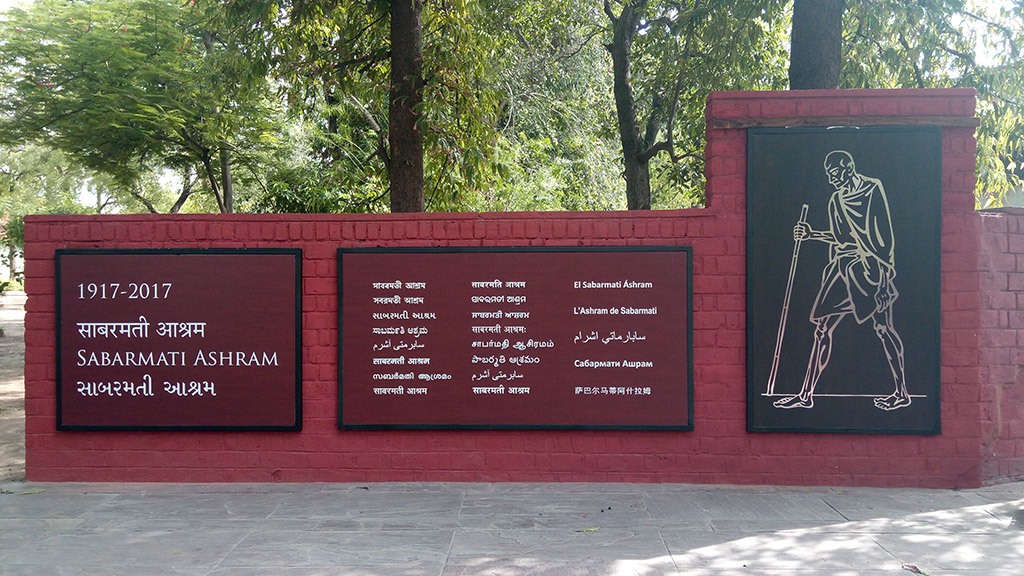
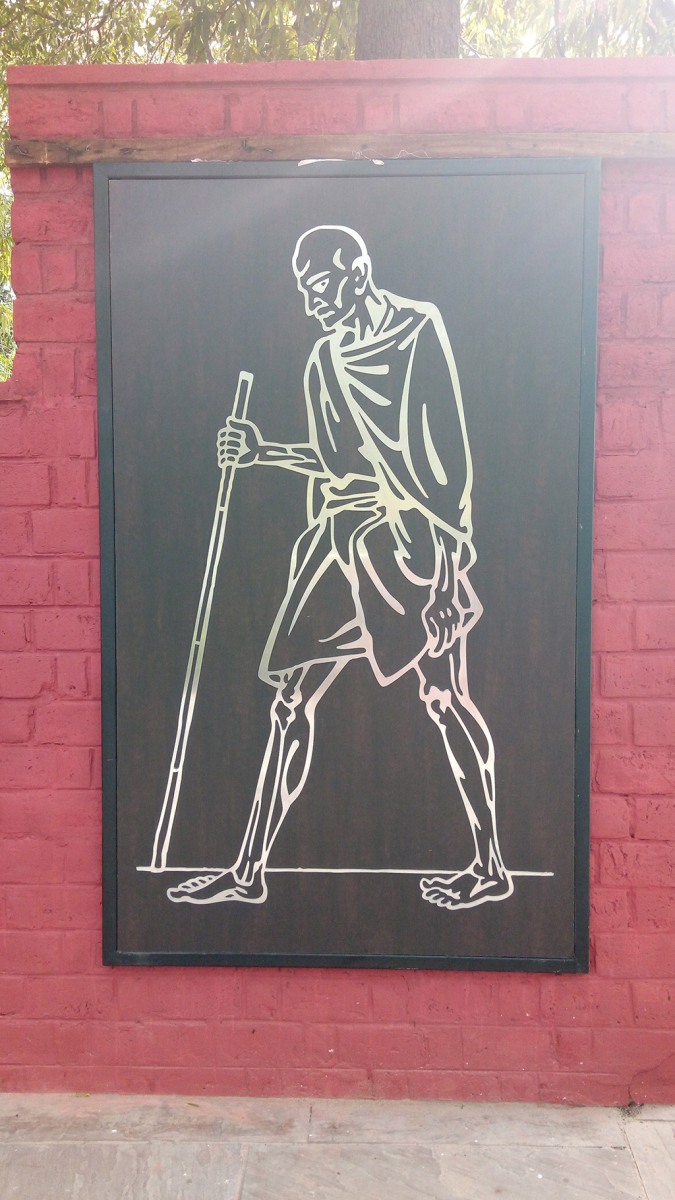
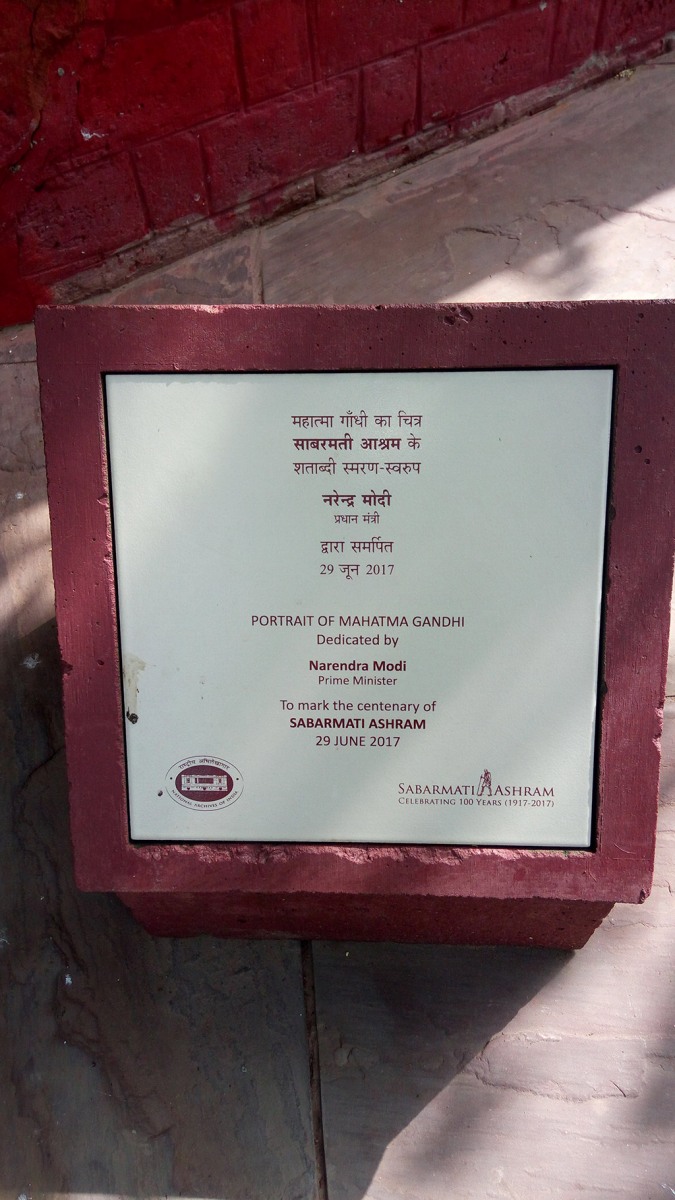
Satyagraha Ashram Sabarmati
[You gave us freedom without sword or shield;
Oh! Saint of Sabarmati, what you have achieved is amazing]
[दे दी हमें आज़ादी, बिना खड्ग बिना ढाल,
साबरमती के संत तूने कर दिया कमाल]
Gandhiji stayed at the Sabarmati Ashram from 1917 to 1930. This became his karmaboomi; the land of his karma – his actions. ‘Similar to the successful practice of Satyagraha (the insistence of truth through non-violent resistance) in South Africa, even India’s independence could be achieved through the same path’: this was the hope Gandhiji carried with him when he returned to his homeland on January 9, 1915. In order to lead a public life, he set up an Ashram on May 25 of that same year, in a rented bungalow in a village in Ahmedabad called Kochrab. Names such as Sevashram, Tapovan, Satyagraha Ashram were considered for the Ashram, but Gandhiji used to say: ‘My life is dedicated to the pursuit of truth. I want to live in its pursuit, and even death is acceptable.’ The Ashram was therefore called the Satyagraha Ashram. However, this place is more popularly known as the Sabarmati or Gandhi Ashram. Gandhiji did not want the Ashram to be identified with his name. He used to say:
“Do not associate with my name, associate with my work.”
The Ashram on the banks of the Sabarmati
On June 17, 1917 the Ashram was relocated. Clearing the shrubbery, the Ashram residents began inhabiting the secluded land at the confluence of the rivers Sabarmati and Chandrabhaga.
Let’s read the purpose of the Ashram in Gandhiji’s own words – “Taking a pledge to serve the nation in a manner which results in the well-being of the society, and making sustained efforts to provide such service, is the purpose of the Ashram.”
In order to attain this purpose, he considered necessary the eternal vow of the five Patanjali Yogasutras – truth, non-violence, celibacy, renunciation and non-stealing. Also, significant vows such as working towards the eradication of untouchability, respecting the equality of all religions, accepting swadeshi (home grown/ goods), being fearless, and showing restraint and diligence, were considered to be guiding stars for the Ashram. These vows proved to be significant in honing the qualities of the Ashram residents.
Initial activities
Education and industry were the earliest activities started at the Ashram. A school and handloom unit were initially run out of huts mad of mats. In Vinoba Bhave, Kaka Kalelkar, Kishorlal Mashruwala, Mahadevbhai Desai, Narahari Parikh, Chhaganlal Gandhi and Pandit Khare among others, the school had teachers of a very high quality. Agriculture, animal husbandry, production of textiles and village industries are the fundamentals of rural India, and therefore measures were taken for their development. Several experts in these areas were brought in.
Farming, building cowsheds, establishing a leather workshop, carpentry, and the crafting of tools for the production of textiles were all initiated. The Ashram began to buzz with various activities, whose vibration filled the atmosphere. The Ashram did not discriminate on the basis of caste, creed, religion, region, or language. There was no place here for untouchability. Women here were urged to break the shackles imposed upon them by society. There was a concept of community living, and education was imparted in Sanskrit, Hindi, Gujarati, Tamil, Telugu, and English, as people from varied regions came together, there was a separate syllabus for children as well. There were arduous daily activities: everyone used to wake up at 4am, and the day would begin with group prayer at 20 minutes past 4. It was mandatory for everyone to perform strenuous work for 4 hours, engage in learning for three and a half hours, exercise for an hour, and spend an hour at prayer morning and evening, as well as participate in activities such as collective cleaning.
Three features of the Ashram
Undertaking satyagraha in order to bring about change in society, fasting on the day of Ekadashi in order to improve the life of a Satyagrahi that is (the one who practices Satyagraha), and engaging in creative work to build a Satyagrahi society these were the three features of the Ashram, which provided patriots who dedicated their entire lives to serving the nation. Experiments in turning individual qualities and ideals into a public value system were also undertaken here, as was planning and executing the agenda for India’s freedom. Mill workers from Champaran, Kheda, Borsad and Ahmedabad, together with the residents of the Ashram participated in the Bardoli Satyagraha. The Ashram actively participated in protests against the Rowlatt Act, in the non-cooperation movement, building communal harmony, working towards the eradication of untouchability and ensuring free and equal temple entry, bringing about the prohibition of alcohol, and leading movements against liquor factories and foreign goods.
The Dandi March, organized on March 12, 1930 increased the popularity of the Ashram amongst people. Along with seventy eight Ashram residents, who were leading their lives as disciplined Satyagrahis, Gandhiji undertook the Salt Satyagraha by conducting a march from Sabarmati to Dandi village, near Navsari. This Satyagraha shook the foundations of the British Empire. Gandhiji was determined not to return to the Ashram without attaining freedom. Around sixty thousand people across the country went to jail during this movement, and the government went about seized the land and properties of many others. In protest, Gandhiji wrote a letter to the government urging them to seize Sabarmati Ashram. The Ashram was not seized, but it was rendered desolate. When most Ashram residents were released from jail in 1933, Gandhiji asked them to choose their area of work, and set up Ashrams across the country. There were approximately three hundred Ashram residents, who came from fourteen different regions. They went and settled in different places. While the Ashram itself was bare after the Ashramites left, local residents decided to protect it. Under Gandhiji’s guidance, the Harijan Ashram Trust was established, and activities such as Vinay Mandir, Adhyapan Mandir, Boarding schools, cowsheds and Khadi and Village Industries units were initiated for the development of Harijan girls. That is untouchable girls.
The period spent by Gandhiji at the Sabarmati Ashram from 1915 to 1930 altered and refined his personality. It was here he experimented with truth and non-violence, renunciation and refinement of life, service and nursing, love and compassion, and his ideas on public life. Equally, it was here that he implemented them. This is where he attained abundant love, and where this traveller was initiated into his journey on the path of the divine.
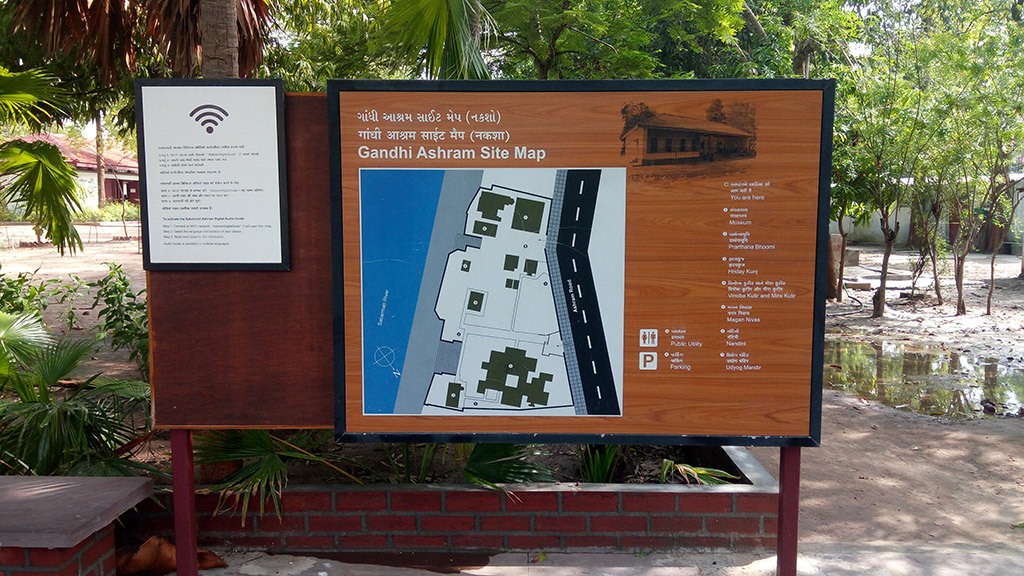
Let’s see inside the Ashram
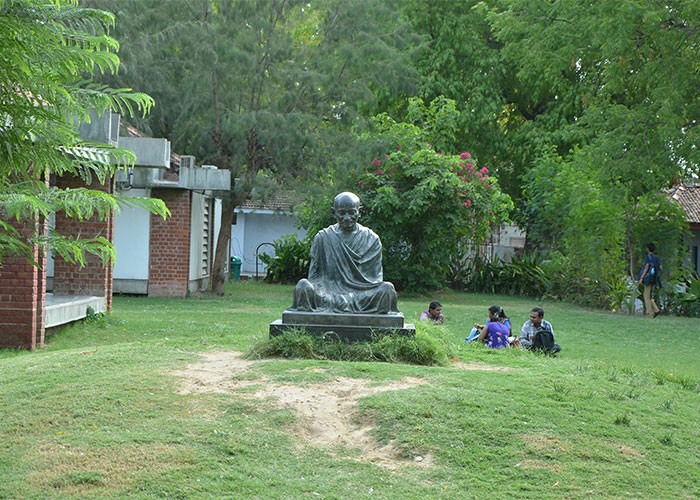
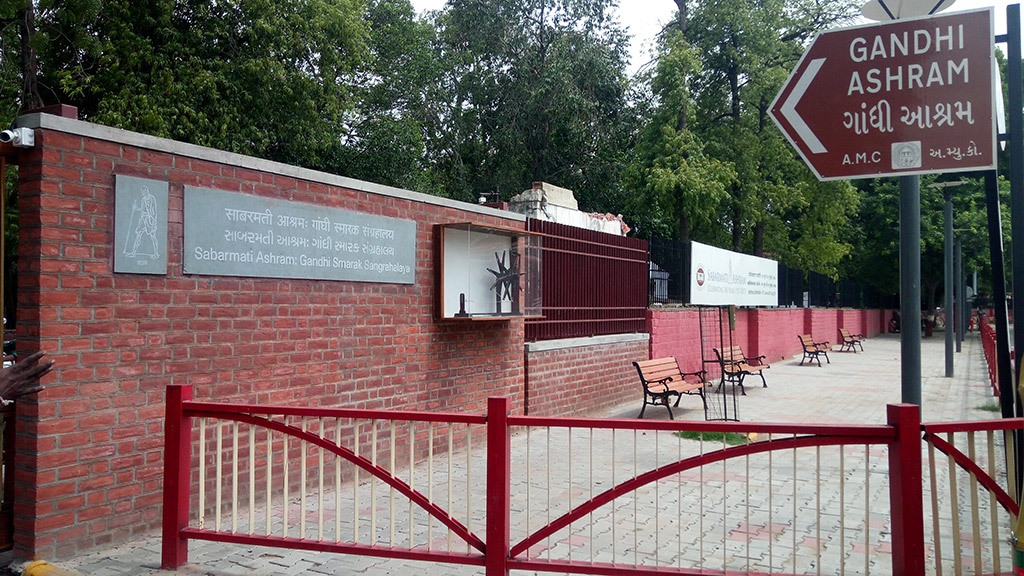
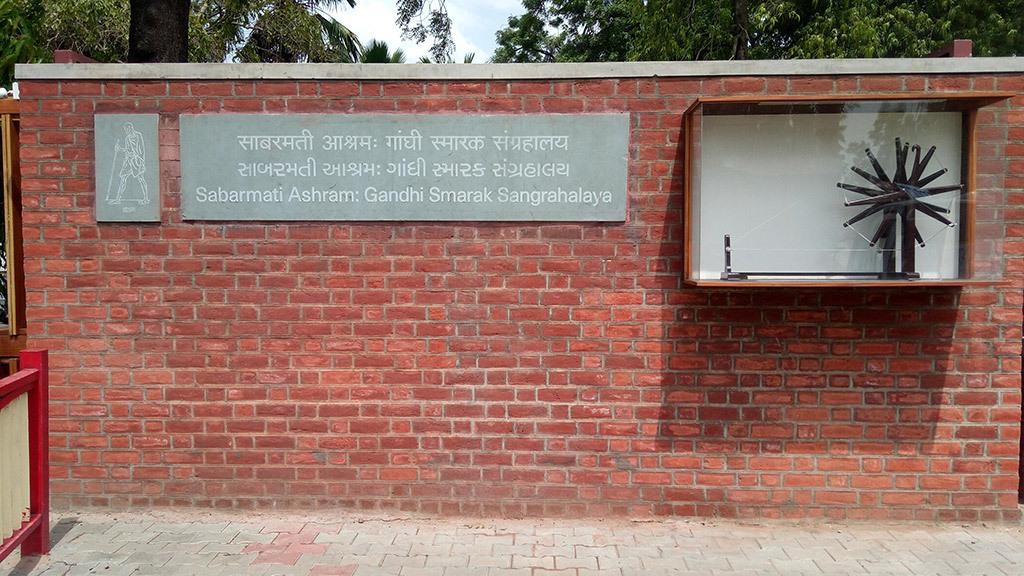
In the year 1947 the country attained independence, but suffered the loss of Gandhiji within months. Thereafter, it was decided that activities in memory of Gandhiji’s contribution to the freedom movement would be continued on the site of this Ashram, by protecting it as a national monument. It is thus that the Sabarmati Ashram Preservation and Memorial Trust was formed in 1951, and the work of preserving the memorials to the Father of the Nation began in earnest. In the year 1963, a new building, the Gandhi Smarak Sangrahalaya was built, and inaugurated on May 10th by the then-Prime Minister Jawaharlal Nehru. In 2017, this Ashram has completed 100 years of existence. Many incidents have transpired here in this journey of a century. Many ups and downs have been witnessed. Gandhiji’s Ashrams were also based on the spirit of religion, but his was a religion that sought to break the walls of sectarianism, stereotypes, resentment, and discrimination against other sects and religions. The Ashram grew based upon the ideals of ancient culture, and the large-heartedness of a certain kind of modern thinking. It respected ‘karma’ (action) but there was no room for rituals. There was a thirst for knowledge, but no pretence of exhibiting knowledge. There was devotion here, but devotion to humanity. This Ashram started a new tradition, and many Ashrams have since been established at many places across the country, on a similar ideology. They have each actively participated in the freedom movement.
Photo Gallery